
How to Add Sitelinks in Google Ads
By Adrian Chromenko, primarydm.com·November 23, 2026·6 min read
Quick answer
In Google Ads, open Campaigns › Assets, click the plus button and choose Sitelink. Pick where to add it (Account is a good start), then enter the sitelink text (up to 25 characters), both description lines and the page's URL. Click Add sitelink to add more, aiming for at least four, then click Save.
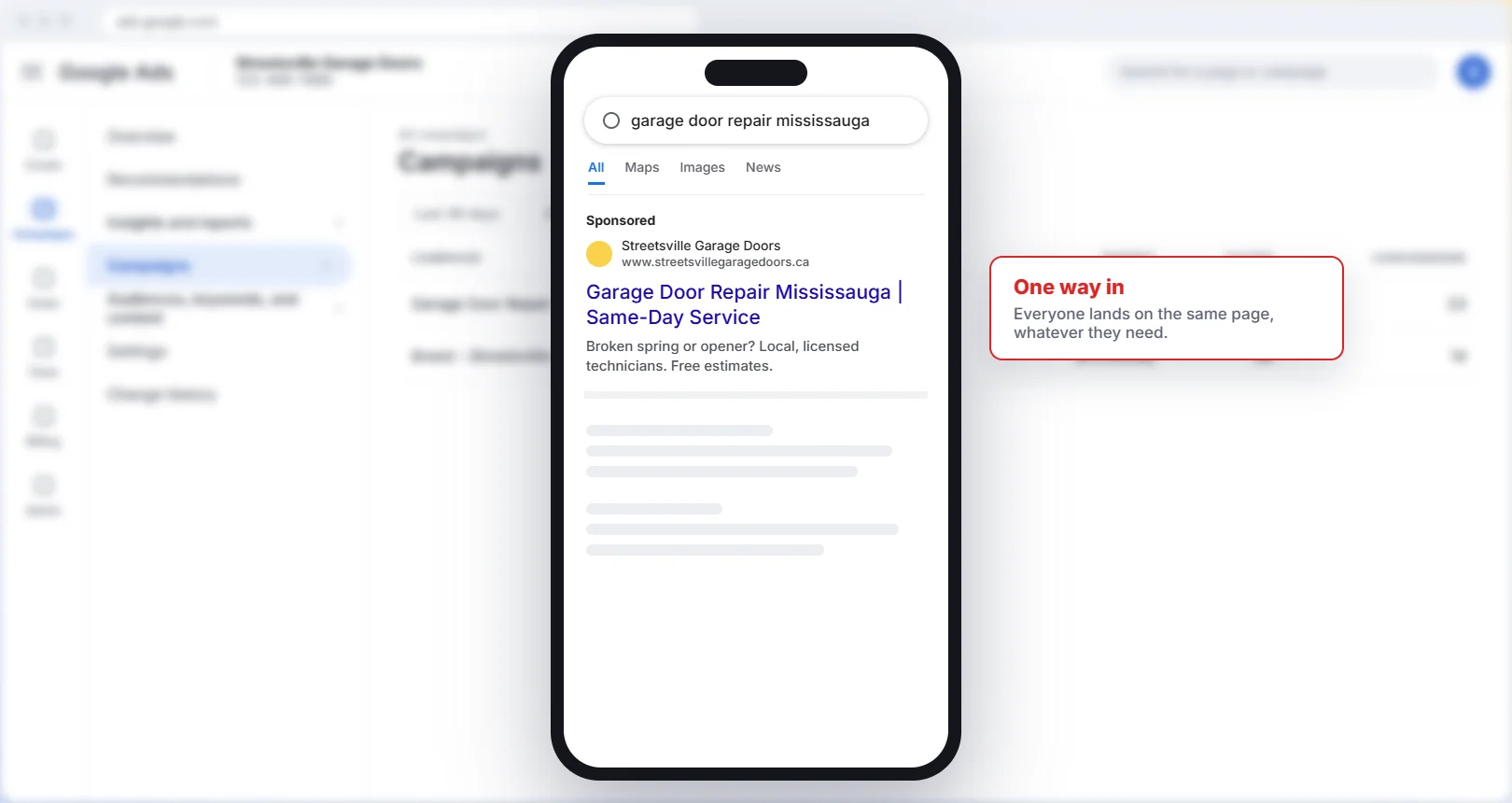
A Google ad normally has one link: the headline. Everyone who clicks lands on the same page, whether they wanted a quote, a repair or a new product. Sitelinks add extra links under your ad, each going straight to a different page on your site, like Free Estimates or Same-Day Repairs. They make your ad bigger and give people a shortcut to what they came for. They're free to add and take about ten minutes. Watch the video above, or follow the steps below.
Why add sitelinks
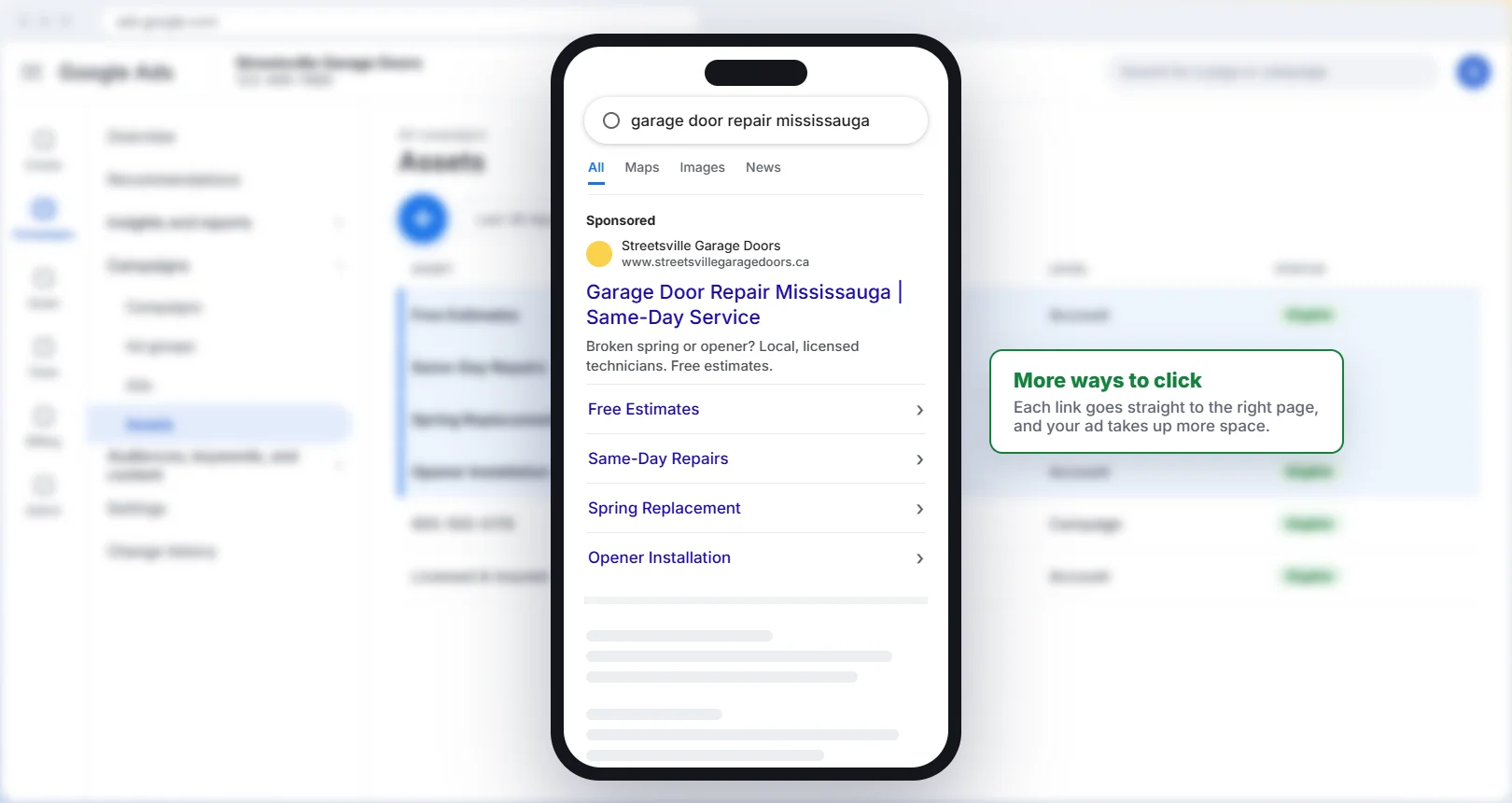
Without sitelinks, someone searching for a garage door repair has to land on your homepage and find the right page themselves. Some will, and some will go back to the search results. With sitelinks, the pages they're most likely to want are right there in the ad, and your ad takes up more space on the results page.
How to add sitelinks
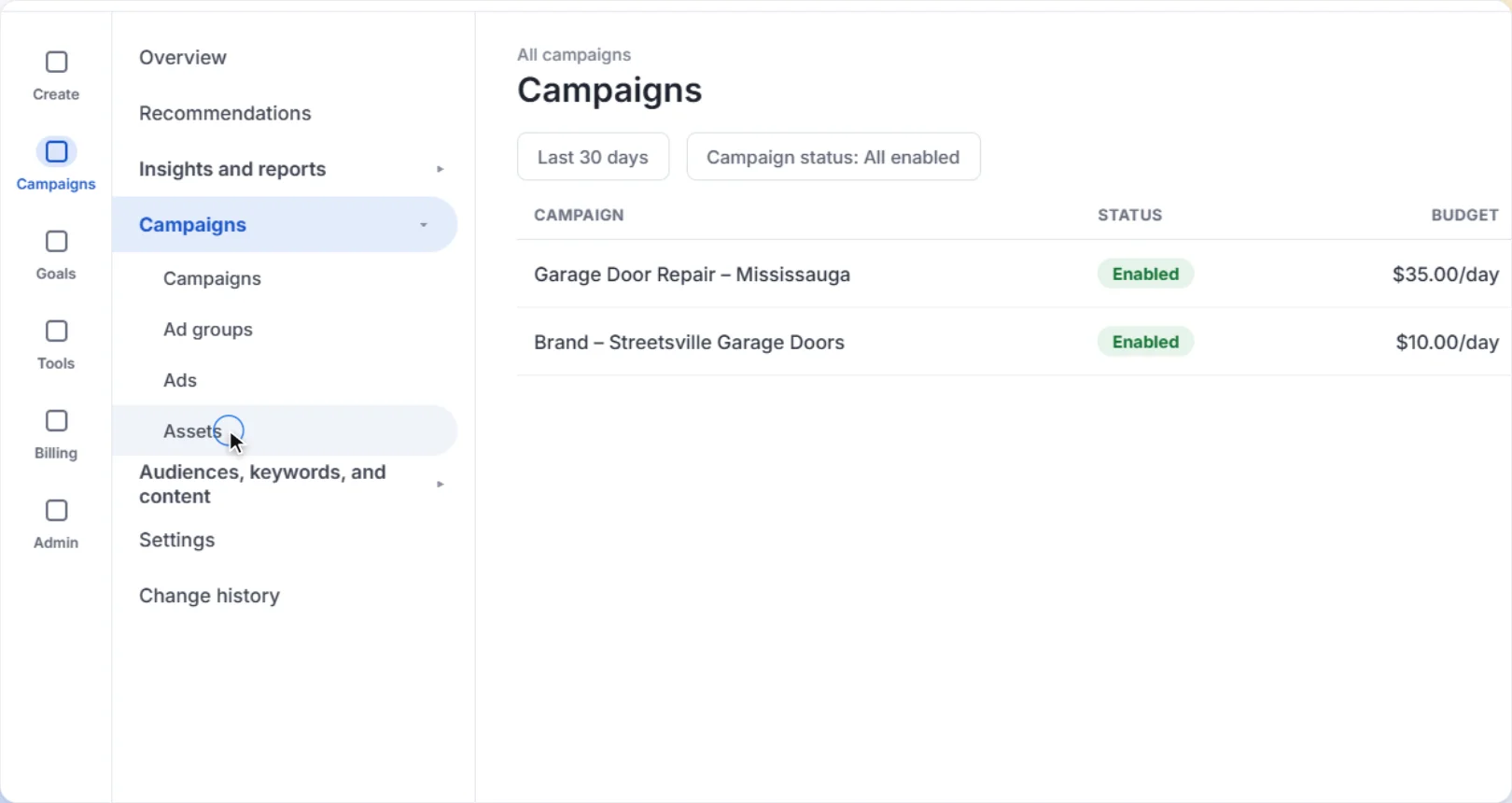
1Open Assets
In the left menu, open Campaigns, then click Assets. You'll see the assets you already have, like call assets and callouts.
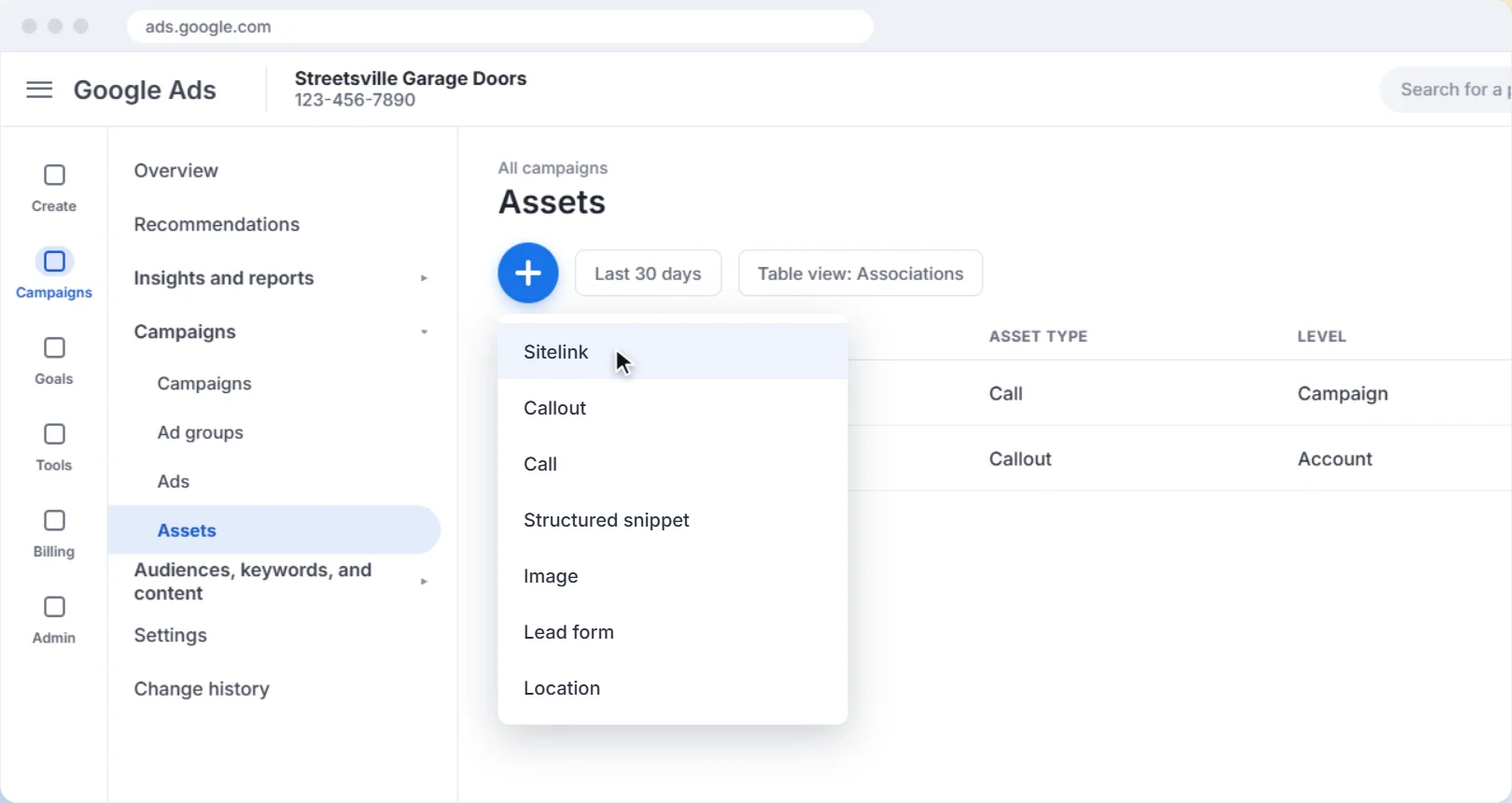
2Click the plus button and choose Sitelink
Click the blue plus button, then choose Sitelink from the list.
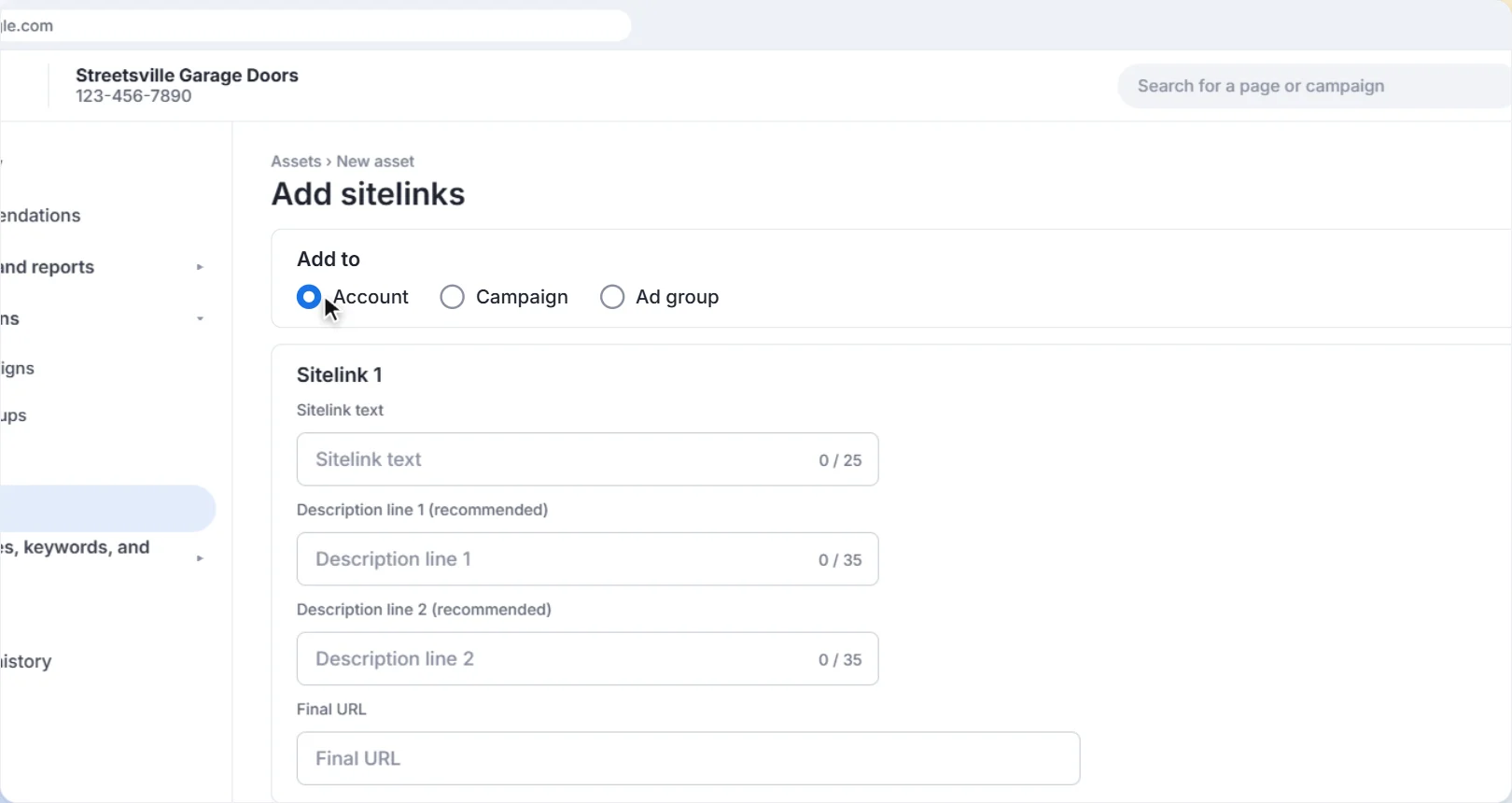
3Choose where to add them
Under Add to, choose Account, Campaign or Ad group. Google suggests starting at the account level, so your sitelinks can show with every campaign. Add campaign or ad group sitelinks later if a campaign needs its own, for example links to different services.
4Enter the text, descriptions and URL
Choose Create new and fill in:
- Sitelink text: the link people see, up to 25 characters. Name the page plainly, like Free Estimates.
- Description lines 1 and 2: optional, but Google highly recommends them. When both are filled in, your sitelinks can show in a larger format with this extra detail.
- Final URL: the page the link should open. Use a page on the same website as your ad.
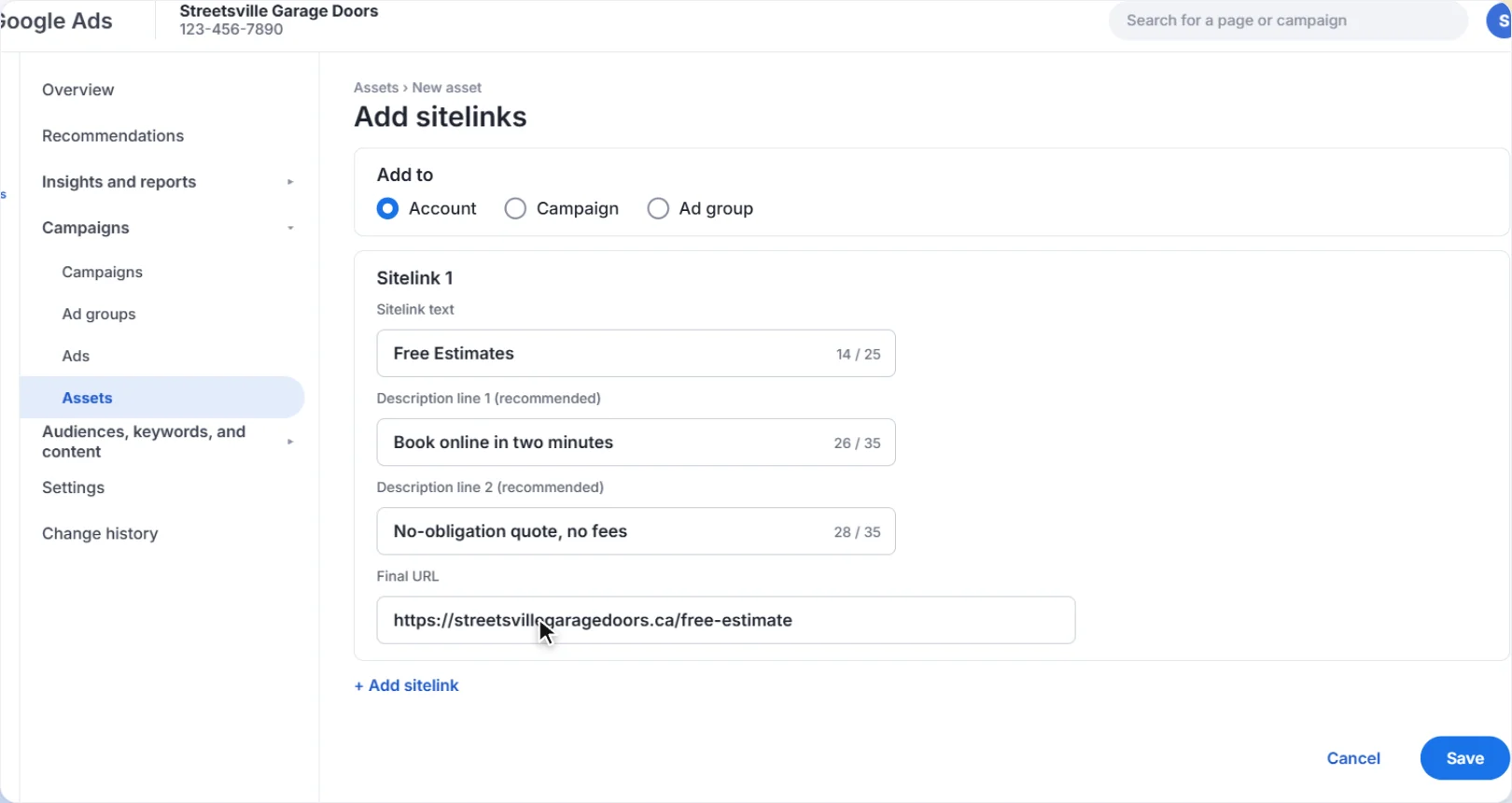
5Add more sitelinks
Click Add sitelink and repeat for your other key pages. Your ad needs at least two sitelinks before any show, and Google recommends at least four at the account level. On a phone, your ad can show up to eight; on a computer, up to six.
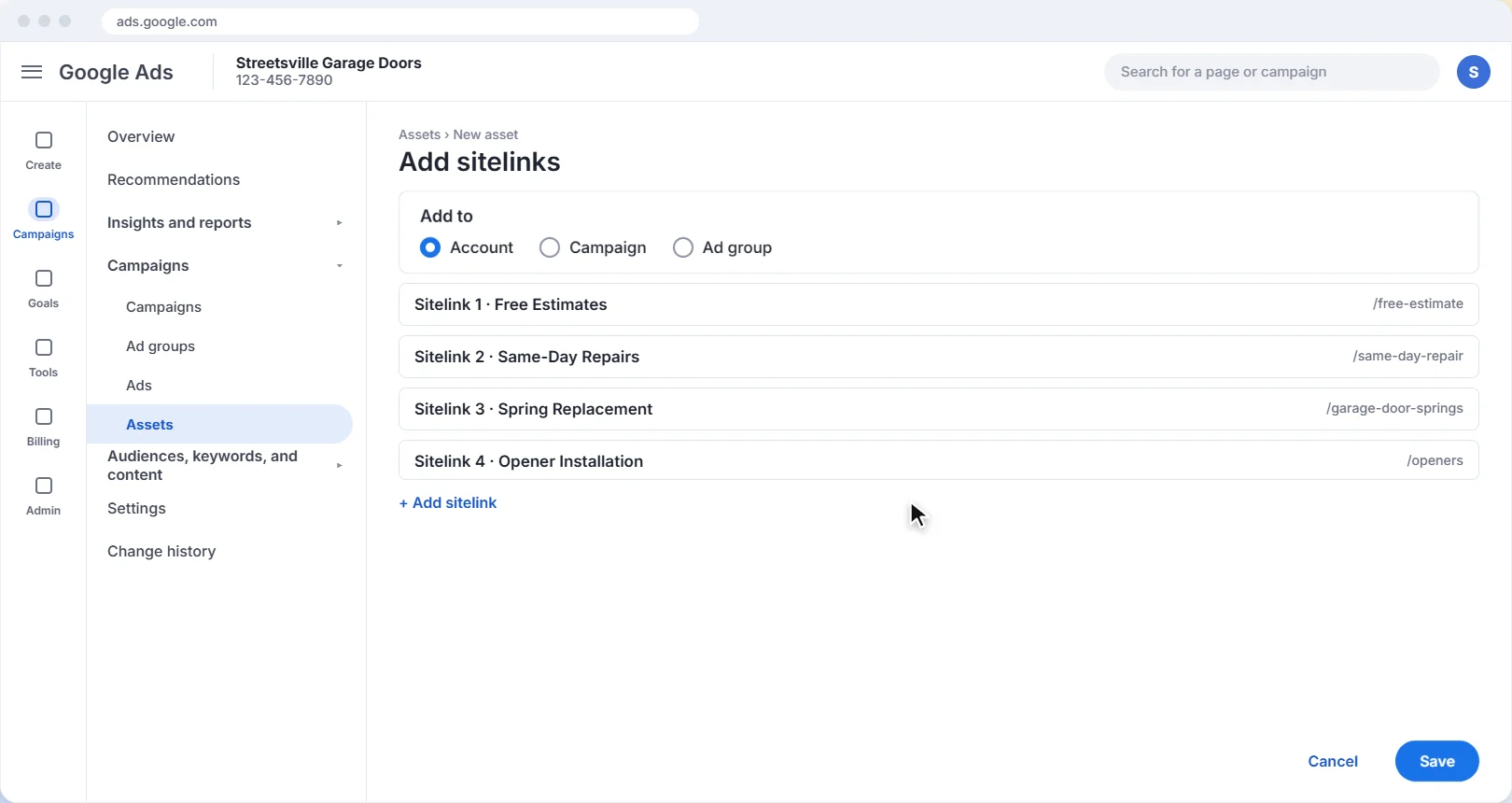
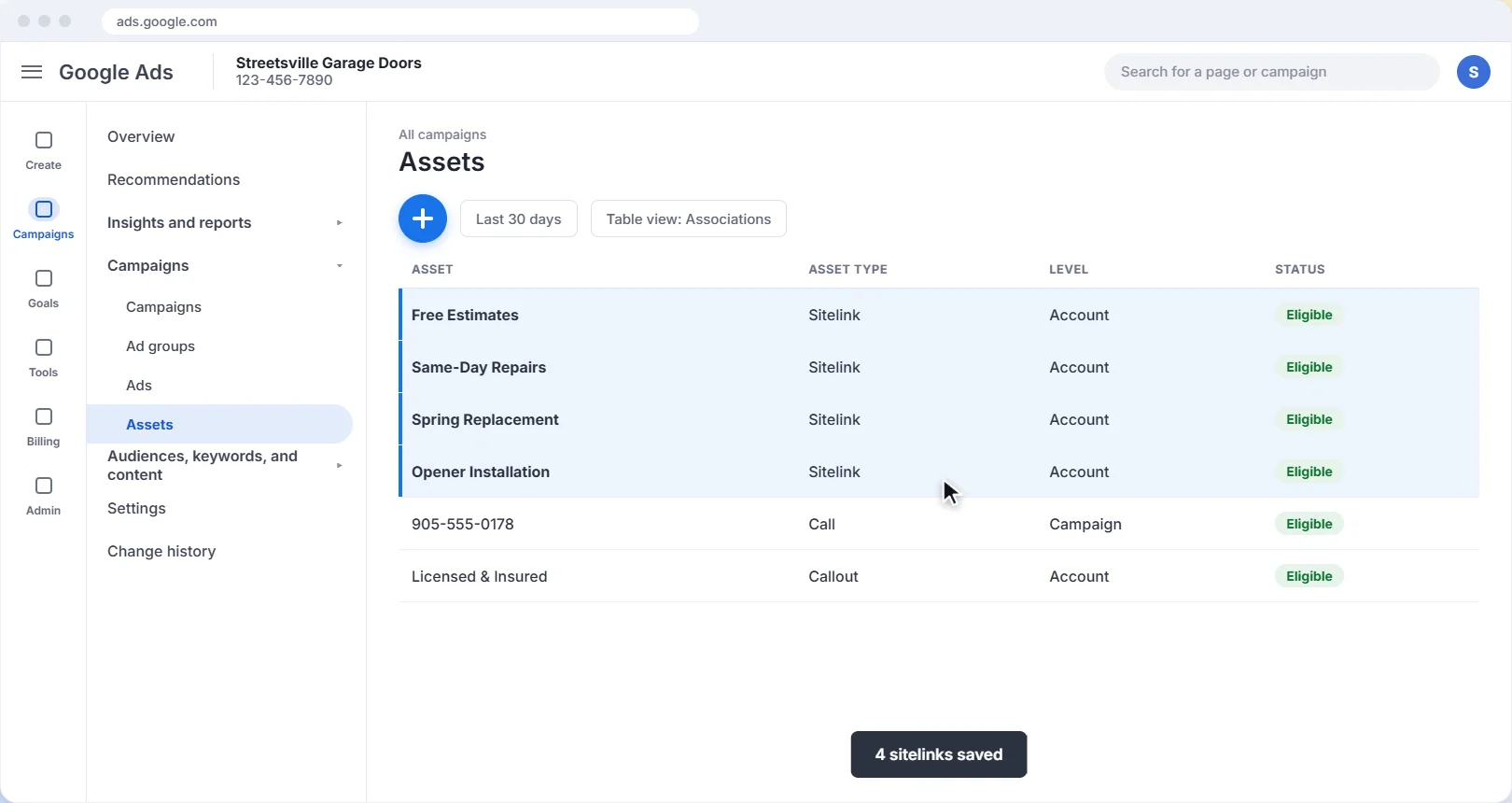
6Save
Click Save. Your sitelinks now appear in the Assets list. Google decides when to show them, based on whether they're expected to help your ad, so they won't appear with every ad.
Here's what people on a phone can see once they're live: your ad with a list of links underneath, each going to its own page.
Sitelink examples for a local business
The best sitelinks are the pages people would look for anyway. For a local service business, that's usually:
| Sitelink text | Description lines | Links to |
|---|---|---|
| Free Estimates | Book online in two minutes · No-obligation quote, no fees | Your quote or contact form |
| Same-Day Repairs | Technicians across Mississauga · Call before noon, fixed today | Your emergency or repair service page |
| Spring Replacement | Broken spring? We carry parts · Most jobs done in one visit | A page for that specific service |
| Reviews | See what neighbours say · Over 200 five-star reviews | Your reviews or testimonials page |
| Service Areas | Mississauga, Brampton, Oakville · Check if we cover you | Your service area page |
Use details that are true for your business; the numbers above are examples. If you don't have a page for a service yet, that's worth fixing first: a sitelink to your homepage doesn't save anyone a click. A website with a page for each main service makes sitelinks, and your ads in general, work much harder.
Each sitelink needs different text. Google doesn't allow two sitelinks with the same link text, even if they go to different pages. The text also has to describe what's on the page it opens, and can't use symbols or punctuation just to grab attention, like exclamation marks or arrows.
Account, campaign or ad group?
| Level | Where they can show | Best for |
|---|---|---|
| Account | With ads in every campaign | Pages that suit any search: estimates, reviews, contact |
| Campaign | With ads in that campaign | A campaign for one service or location |
| Ad group | With ads in that ad group | Very specific links, like one product line |
By default, an ad group uses the sitelinks from its campaign and account. If you add sitelinks at the ad group level, those take over for that ad group; remove them to go back to the campaign's.
A few more tips
- Sitelinks don't cost extra to add. You pay for a click on a sitelink the same as a click on your headline, and Google doesn't charge more than two clicks per ad impression.
- Add a call button too. Sitelinks send people to pages; a call asset lets people on phones call you straight from the ad.
- Write ads that match. Sitelinks work alongside your headlines and descriptions. See how to write Google Ads that make people click.
- Better ads, better placement. Sitelinks show more often when your ad ranks near the top. Improving your Quality Score helps with that.
- Check which pages get the clicks. Open the Assets report after a few weeks. If a sitelink gets almost no clicks, swap it for a page people are more likely to want.
Want help with your Google Ads?
Our Google Ads management covers sitelinks, call assets and the rest of your ad setup, plus the service pages your sitelinks need to point to.
See our Google Ads managementThe screens in this guide are simplified illustrations of Google Ads; Google updates its layout often, so labels may differ slightly in your account. Google's own guides: About sitelink assets and Sitelink asset requirements. The garage door business, pages and review count are examples.
Frequently asked questions
What is the character limit for Google Ads sitelinks?
Sitelink text can be up to 25 characters in most languages (12 in double-width languages like Chinese, Japanese and Korean). The two optional description lines are commonly limited to 35 characters each. Short, plain text like Free Estimates works best.
How many sitelinks should I add?
At least four. Your ad needs at least two before any sitelinks show, and it can show up to six on a computer and up to eight on a phone. Google recommends at least four at the account level, and more with descriptions for your busiest campaigns.
Do sitelinks cost extra?
No. Adding sitelinks is free. A click on a sitelink costs the same as a click on your ad's headline, and Google doesn't charge for more than two clicks per ad impression.
Why aren't my sitelinks showing?
Google only shows sitelinks when it expects them to help your ad. Make sure you have at least two approved sitelinks, each with different text. Better ads help too: see how to improve your Quality Score. If your ads aren't showing at all, see why your Google Ads aren't showing.
Should I add sitelinks at the account or campaign level?
Start at the account level with pages that suit any search, like estimates, reviews and contact. Add campaign or ad group sitelinks when a campaign needs its own links, such as a campaign for one service. Ad group sitelinks take over from the campaign's for that ad group.
What are good sitelink examples for a local business?
Link to the pages people would look for anyway: free estimates or quotes, a page for each main service, emergency or same-day service, reviews, and the areas you serve. Each sitelink needs its own text and should open the page it names. Pair them with a call button, or let us set them up through our Google Ads management.
More Google Ads guides

How to Write Google Ads That Get Clicks (Headlines and Descriptions)
Go to Campaigns › Ads, click + and choose Responsive search ad. Use the page for that service as the final URL, then write up to 15 headlines (30 characters each) and up to 4 descriptions (90 characters each). Put your service and city in one headline, make the rest say different things (proof, an offer, a call to action), aim for Good or Excellent Ad Strength, and pin sparingly.
1:27 video · 6 min read
How to Add a Call Button to Your Google Ads (Call Assets)
In Google Ads, go to Campaigns › Assets, click +, choose Call, pick the campaign, enter your country and phone number, optionally set a schedule for your business hours, and save. People searching on their phones can then tap a Call button right on your ad.
1:18 video · 5 min read
How to Use Google Keyword Planner (Free, Without Running Ads)
In Google Ads, go to Tools › Planning › Keyword Planner and click Discover new keywords. Type a few words that describe your services, click Get results, then change the location to the area you serve. Use Avg. monthly searches to see how popular each keyword is and the top of page bid columns to estimate costs. It's free, and you don't need a running campaign.
1:22 video · 7 min read

How to Improve Your Google Ads Quality Score
Quality Score is Google's 1 to 10 rating for each keyword, built from expected clickthrough rate, ad relevance and landing page experience. To see it, open Search keywords, click the columns icon and add the Quality score columns. Then fix whichever part is Below average: use the searcher's words in your ad, give people a specific reason to click, and send the click to a fast page about that exact service.
1:23 video · 7 min read
Why Is My Google Ad Disapproved? (And How to Fix It)
A disapproved ad broke a Google Ads policy and can't show anywhere. Open Campaigns › Ads and hover over Disapproved in the Status column to see which policy. The usual causes for small businesses are a broken landing page (Destination not working), a URL that doesn't match your site, all caps, or extra punctuation like "!!". Edit the ad, fix it and save, and it's reviewed again, usually within one business day. If Google got it wrong, appeal from Tools › Policy manager.
1:24 video · 7 min read

How Much Should I Spend on Google Ads?
Multiply a typical cost per click for your keywords by the clicks you want each day (often 10 to 20 for a local business) to get your average daily budget. Over a month, Google won't charge more than 30.4 times that daily amount. Set it under Campaigns › Campaigns by clicking the pencil in the Budget column, then raise it only when the clicks are turning into customers.
1:27 video · 6 min read
Google Ads Keyword Match Types Explained (Broad, Phrase, Exact)
Google Ads has three keyword match types. Broad match (the default, no symbols) can show your ad on related searches. Phrase match ("in quotes") shows on searches that include your keyword's meaning. Exact match ([in brackets]) shows only on searches with the same meaning or intent. On a small budget, start with phrase and exact for your main services.
1:27 video · 7 min read
How to Set Up Google Ads Conversion Tracking
In Google Ads, go to Goals › Summary and click + Create conversion action. Enter your website and click Scan, pick a category like Submit lead form, then track your thank-you page with Page load, URL contains “thank-you”. Keep it as a primary action, set Count to One for leads, and save. For calls, turn on call reporting so Calls from ads is tracked with a minimum call length, then test everything with Tag Assistant.
1:15 video · 7 min read
Why Are My Google Ads Not Showing? (And How to Fix It)
Start with the Status column on your Campaigns page and hover over it for the reason. The usual causes are a paused or ended campaign, a billing problem, a disapproved ad, keywords with low search volume, or a budget or bid that's too low. Check with the Ad preview and diagnosis tool, not by searching for your own ad.
1:25 video · 6 min read

How to Use the Search Terms Report in Google Ads
Open your campaign, go to Insights and reports › Search terms, set the date range, and sort by Cost. Tick searches that cost money but don't fit your business and click Add as negative keyword; add searches that bring in customers as keywords.
1:34 video · 6 min read
How to Set an Ad Schedule in Google Ads
Open Campaigns › Ad schedule, click the pencil icon, pick your campaign, add the days and hours you want your ads to run (for example Monday to Friday, 7:00 AM to 7:00 PM), and save. Outside those hours your ads stop showing, so you aren't paying for clicks nobody can answer.
1:14 video · 5 min read
How to Target Your Service Area in Google Ads
Open your campaign, click Settings › Locations, choose Enter another location › Advanced search › Radius, enter your address and how far you travel, then open Location options and choose Presence. Save, and your ads focus on people who are actually in your service area.
1:20 video · 5 min read
How to Add Negative Keywords in Google Ads (Step by Step)
Open your campaign, go to Audiences, keywords, and content › Search keywords › Negative search keywords, click +, type the words you want to block (like jobs or diy), choose the campaign or ad group, and save. Your ads stop showing for searches that contain those words.
1:15 video · 5 min read